
Why IBM Turned to Microsoft for BASIC
Not Because of Bill Gates’ Mother

There is a widespread opinion that Microsoft’s lucrative 1980 contract with IBM must have involved some kind of foul play. After all, it is hard to believe that the computing mammoth like IBM needed a tiny company such as Microsoft to provide system software for its planned entry-level computer.
As usual, to make an informed conclusion, some wider context is necessary…
Microsoft’s Monopoly on BASIC Interpreters
The critical thing to understand is that Microsoft was a monopoly even before IBM approached it. The market it dominated was small: BASIC interpreters for personal computers, but it was a monopoly, nevertheless.
Microsoft’s core product, the BASIC interpreter, ran on almost all popular personal computers at the time1, including various TRS models, the Commodore PET, Atari machines, and the Apple II.
The only theoretical alternative was Tiny Basic - a public domain interpreter developed in 1975 as a reaction to Microsoft BASIC which was considered too expensive. Tandy used Tiny Basic to develop the TRS-80’s Level I Basic, but even they switched to Microsoft’s Level II Basic soon after.
Some computer manufacturers opted to develop their own version of BASIC with varying success. The Apple II initially shipped with a BASIC written by Steve Wozniak (later named Integer BASIC as it supported only integer numbers), but it was replaced by Applesoft BASIC which was a derivative of Microsoft BASIC.
British home computer makers were more successful in creating their own versions of BASIC interpreters (Acorn’s excellent BBC BASIC is one such example) or outsourcing its development to local software companies rather than Microsoft (Sinclair contracted Nine Tiles; Amstrad used Locomotive Software). On another hand, Japanese manufacturers almost universally adopted Microsoft BASIC.
To cut a long story short: if a company wanted to enter a home computer market in late 1970s and early 1980s, it was expected to include a built-in BASIC interpreter. The realistic options were to either develop one specifically for the new machine or to license Microsoft’s. Most hardware producers chose latter, as it was less risky, faster and ultimately cheaper. IBM, however, was not only able to produce a BASIC for new hardware; it had already done so multiple times. Why did it end up going to Microsoft anyway?
IBM and Small Computers
In 1980, IBM was by far the largest computer company in the world, with $26.21 billion in gross income and more than 340,000 employees2. Its most important products at the time were the mainframe class computers of the IBM System/370 family which dominated the industry in the 1970s.
Yet, there were problems as well; the most pressing one was of legal nature: the antitrust lawsuit that was filed in 1969 and was not resolved until 1982 was hanging over the head of the mighty IBM and affected how it conducted business.
In addition, it became obvious IBM was slow to adopt to new trends in computing. The threat was coming from below: first from the minicomputers produced by companies such as Digital Equipment Corporation (DEC), Hewlett-Packard, Data General and Prime Computer Inc. Then, in 1975, the first commercially successful microcomputers appeared, developed mostly by small startups that operated very differently from IBM. In the beginning, they were used only by hobbyists. Then they spread into K-12 education and finally small businesses began noticing them after the first spreadsheet and text processing applications were released.
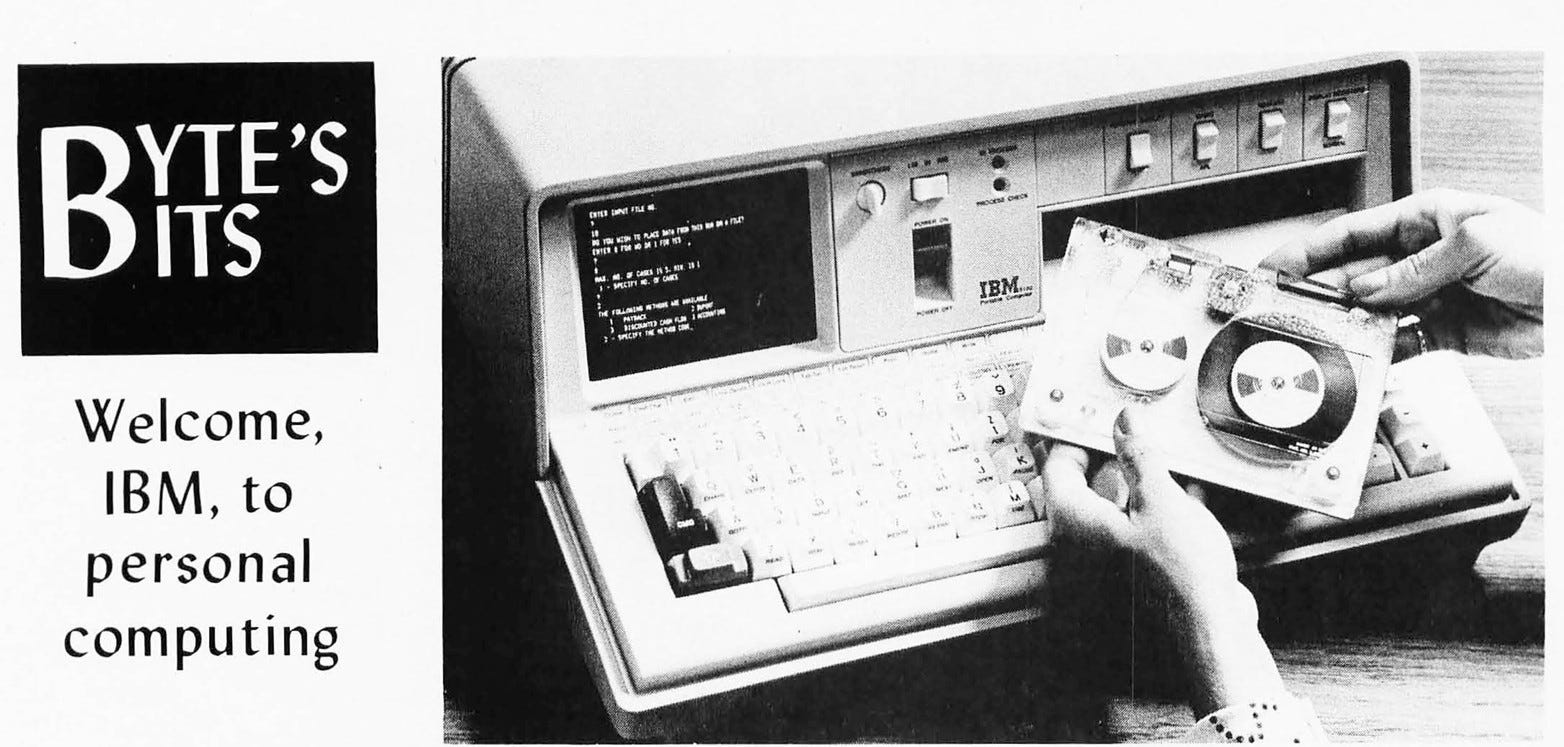
IBM did not ignore the “small” machines. It introduced a series of low-end business computers as early as 1969 with System/3. More interesting was the IBM 5100 Portable Computer first introduced in late 1975, based on the prototype called SCAMP from 1973. It was heralded by the “Byte” magazine as the first personal computer from IBM, despite its high price. Although very innovative, these machines failed to make much impact: they were too expensive and too unfamiliar to computer enthusiasts.
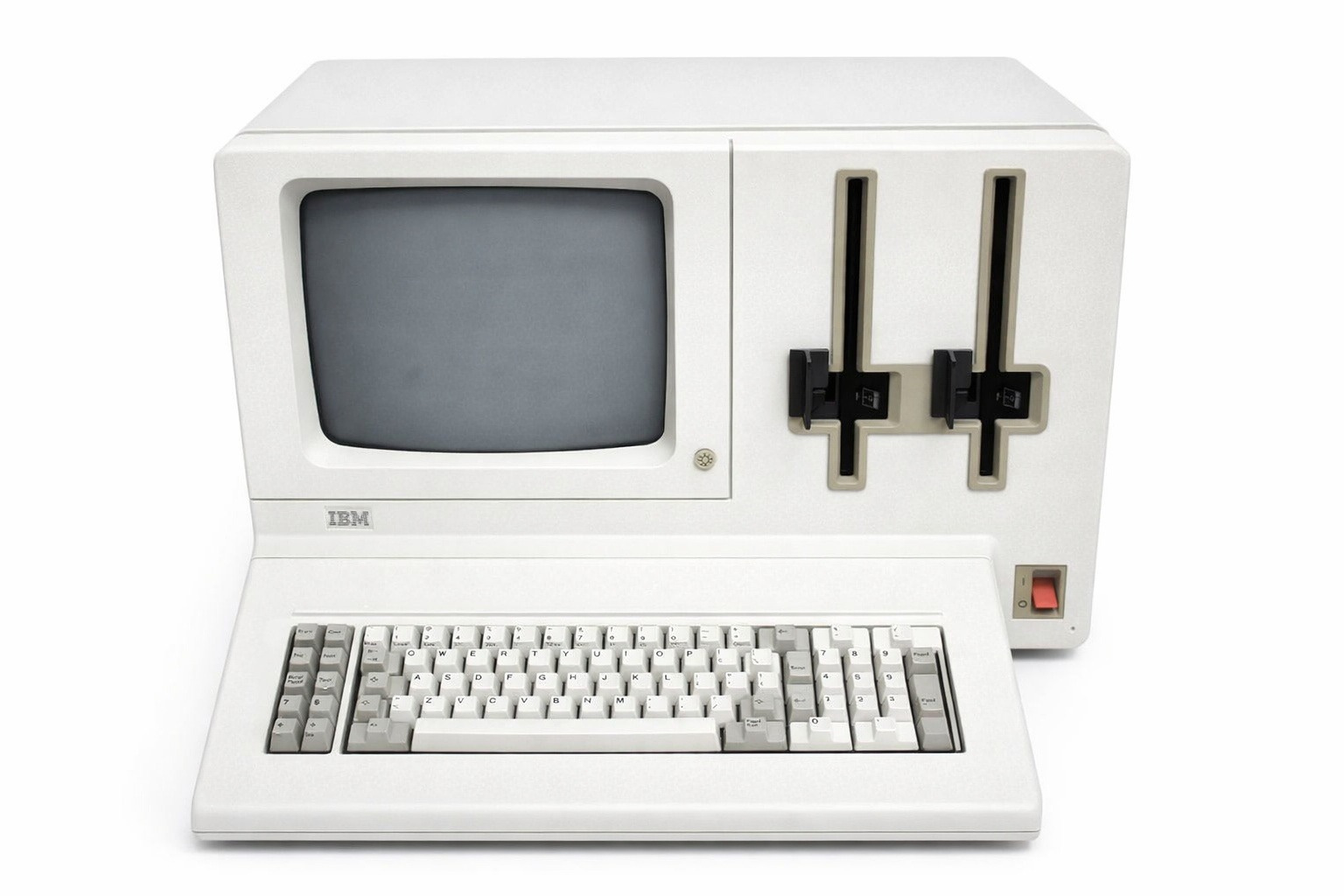
System/23 DataMaster
IBM’s first attempt to build a commercial microcomputer was the IBM System/23 DataMaster. Development began in February 1978 by the Entry Level Systems unit in Boca Raton, FL led by Bill Lowe. The computer used Intel’s 8085 CPU and was designed to be easy to operate in an office environment and to run applications written in BASIC3.
An interesting spin-off from the project was the 5100-based desktop computer IBM 5120, It was developed in only 90 days by a small team led by Bill Sydnes and released before the DataMaster - a true feat that convinced Lowe it was possible to have a successful fast-track project even inside IBM.
It was during the development of the DataMaster that IBM first contacted Microsoft to ask about its BASIC interpreter. The man who initiated the contact was the project’s software lead - Jack Sams. Sams had been with IBM for over two decades at that time; he was a member of the team that produced the IBM System/360. He was also disillusioned with IBM software development practices and proposed purchasing Microsoft BASIC for the DataMaster.
Instead, IBM higher-ups decided to make DataMaster BASIC compatible with IBM System/34 BASIC and that caused the delay of over a year. Sams decided to avoid making the same mistake again if at all possible.
Project Chess
The next opportunity came in early July 1980. IBM CEO Frank Cary summoned Lowe to a meeting of the Corporate Management Committee (CMC) in Armonk NY and asked why IBM could not produce something like Apple II. Lowe replied that it was not possible to develop a successful personal computer within the framework of IBM development processes. He suggested to either license an existing computer such as the Atari 800 or form an Independent Business Unit (IBU) within IBM and let it develop a personal computer in just one year but outside of IBM’s normal structure. Cary immediately rejected the idea of licensing Atari and asked Lowe to form a small task force and come back in a month with an official proposal for a “fast‑track” personal‑computer project.
The task force (internally known as “dirty dozen”) that Lowe assembled right after the July 4th weekend consisted largely of people from the DataMaster project, including Sydnes and Sams. They were determined to not repeat the mistakes which slowed down their previous assignment and decided to quickly develop an early prototype from off-the-shelf components. That prototype would then be given to the third-party software companies who would work on the software in parallel with the Boca Ratton group finishing the hardware.
While Sydnes was busy building the hardware proof of concept, Sams was collecting information about the possible software vendors. He knew the priority was software that would ship in the computer’s ROM - the BASIC interpreter. He also knew where to look for it. What he did not know was what kind of company Microsoft really was; he was wary of dealing with an unreliable group of West Coast hippies operating from a bedroom. There was only one way to find out: on Monday, July 21st, 1980, he called Bill Gates and asked to meet the next day.
The Initial Meeting - “Most likely, nothing will happen”
Gates had a meeting with Atari CEO Ray Kassar scheduled for July 22, but he did not want to miss the chance to talk to IBM, so he rescheduled it. He even dressed in a suit (unusual for him) and invited his old friend and new business associate, Steve Ballmer.
Jack Sams arrived accompanied by Pat Harrington who was in charge of contract administration in the Boca Raton office. After signing nondisclosure agreements, the meeting started. Sams could reveal only that IBM was considering a secret project that, if approved, would need to be completed under a very tight deadline. He made sure to set expectations low: most likely, nothing would come of it, as was often the case with IBM initiatives.
Gates spoke passionately about the microcomputer industry, the shift to 16‑bit processors, and Microsoft’s vision of the future. Sams listened attentively. Gates later came to believe that it was his arguments that influenced IBM to choose Intel 8088 for the PC. In fact, the decision had already been made; Sams simply did not want to reveal it.
On the surface, nothing substantial was decided during that first meeting. Gates later described it as “IBM asking lots of crazy questions”. But that was not the point. Sams was impressed both with Gates personally and with Microsoft as a company. Instead of the tiny, informal operation he had expected, he found a firm of roughly forty employees, with proper offices and a list of happy customers.
After returning to Boca Raton, Sams reported to Lowe that he felt comfortable putting the fate of the project in the hands of the small Bellevue, WA based software company.
The Second Meeting - “By the way, what about CP/M?”
Bill Lowe returned to Armonk on August 6th and presented his plan to the CMC. The committee gave him the approval to form an Independent Business Unit and proceed with the project which was code named “Chess”.
Soon after, Jack Sams called Bill Gates and scheduled a meeting for August 21st. This time the NDA was even thicker and scarier, but Gates again signed it without hesitation. Each side brought four people, including lawyers.
Sams could finally present IBM’s plan: a personal computer built around the Intel 8088, assembled from off‑the‑shelf components, and delivered within a year. He offered Microsoft the opportunity to supply not only the BASIC interpreter, but also all the other products they were selling at the time: compilers for FORTRAN, COBOL, Pascal and BASIC, plus a typing tutor and even a game.
Microsoft had started porting its software to Intel’s 16-bit platforms a few years earlier; now the bet was about to pay off. The company was ready to fully commit to Project Chess and help the Boca Raton team meet its deadline.
There was just one more thing to discuss: The IBM PC was supposed to support floppy disk drives, and for that it needed a disk operating system. Sams hoped Microsoft could sublicense Digital Research’s CP/M, the most popular OS of the time. Microsoft had recently introduced the SoftCard, which transformed an Apple II into a CP/M machine. But it turned out Microsoft could not sublicense CP/M for both legal and technical reasons. The port of CP/M to Intel 8086 was still in progress. However, Gates was happy to personally call Digital Research and help the IBM team arrange a meeting.
That meeting did not go well. But that’s a different story…
Conclusion
The main reason IBM came to Microsoft for a BASIC interpreter, and eventually the operating system, was the brutal deadline for delivering the new personal computer. IBM was obviously capable of developing system software, but not on such a schedule. Instead, they decided to use outside suppliers for the software, just as they did for the hardware, and once they came to that decision, Microsoft was realistically their only option, at least when it comes to BASIC.
Publicly, IBM offered another explanation. It was plausible, but not the primary driver:
Let’s take BASIC as an example. IBM has an excellent BASIC— it’s well received, runs fast on mainframe computers, and it’s a lot more functional than microcomputer BASICs were in 1980. But the number of users was infinitesimal compared to the number of Microsoft BASIC users. Microsoft BASIC had hundreds of thousands of users around the world. How are you going to argue with that?
IBM’s Philip D. Estridge
Another theory commonly mentioned is the alleged friendship between IBM’s president John Opel and Bill Gates’ mother Mary Gates who both served on the board of United Way. Obviously, we don’t know whether Mr. Opel ever discussed IBM’s plans for the ultra-secret personal computer project with Mrs. Gates. What we do know is that IBM wanted all software and almost all hardware developed by third-party suppliers. For a BASIC interpreter, Microsoft was simply the only game in town at the time.
Ars Technica article Total share: 30 years of personal computer market share figures offers an interesting insight into the state of the early microcomputer market
Byte magazine from September 1990 contains an article by David J. Bradley, one of the original IBM PC developers, The Creation of the IBM PC which describes the influence of the DataMaster on the IBM PC.